Welcome to RennTech.org Community, Guest
There are many great features available to you once you register at RennTech.org
You are free to view posts here, but you must log in to reply to existing posts, or to start your own new topic. Like most online communities, there are costs involved to maintain a site like this - so we encourage our members to subscribe or donate. All subscriptions and donations go to the costs operating and maintaining this site. We prefer that guests take part in our community and we offer a lot in return to those willing to join our corner of the Porsche world. This site is 99 percent member supported (less than 1 percent comes from advertising) - so please consider an annual subscription or donation to keep this site running.
Here are some of the features available - once you subscribe RennTech.org
- View Classified Ads
- DIY Tutorials
- Porsche TSB Listings (limited)
- VIN Decoder
- Special Offers
- Paint Codes
- Registry
- Videos System
- View Reviews
- and get rid of this welcome message
It takes just a few minutes to register, and it's quality Porsche information at a low cost.
Contributing Members also get these additional benefits:
(you become a Contributing Member by subscribing or donating money to the operation of this site)
- No ads - advertisements are removed
- Access the Contributors Only Forum
- Contributing Members Only Downloads
- Send attachments with PMs
- All image/file storage limits are substantially increased for all Contributing Members
- Option Codes Lookup
- VIN Option Lookups (limited)
Leaderboard
Popular Content
Showing content with the highest reputation since 01/05/2026 in all areas
-
1 point
-
2006 CAYENNE 955 4.5 V8 DRIVER SIDE PRIMARY CAT REPLACEMENT Full size pictures can be found HERE Writing this down hoping it can help out another pepper owner. SKip to the bottom if you want the short version. Had to replace the drivers side (LHD) primary catalytic converter as the flex pipe had completely corroded away and was flopping loose in the wind. I got lucky and found an aftermarket one on eBay for significantly less than what the dealer would charge me. You’ll need an assortment of tools for the job: Jack Jack stands Ramps for rear 10mm sockets 12mm sockets 13mm sockets Numerous extensions Wrenches in above sizes and flex head ratcheting are awesome 22mm O2 sensor wrench or crowfoot Straight ⅜” and ¼” ratchets and breaker bars for extra leverage as needed. Flex head ⅜” ratchet Long flathead screwdriver to open up the clip holding the O2 sensor wire T25 screwdriver or bit for your screwgun for trim pieces #2 screwdriver or bit for your screwgun for trim pieces Total actual work time was about 8 hours. I could have done it in about 5 or even less if I was truly ambitious, but was taking my time and making sure I didn’t break anything in the tight space. The time also included jacking up the car, removing the underneath skid panels, engine compartment plastics, drivers tire and wheel well liner as well as reinstalling them. See Pelican Parts for the skinny on accomplishing all of those tasks. I’ll skip those tasks here. https://www.pelicanparts.com/techarticles/Porsche_Cayenne_Tech.htm Also crack open the rear hatch and block it from locking as you’ll want to disconnect the battery ground. Here is a video that shows how. Super easy and never knew myself. No need to flip the seat. How to disconnect battery ground in Porsche Cayenne (955) I will preface my replacement with the added bonus of the car having the secondary CAT delete already done. So no fighting with those. So under the car, first things first was loosening up the connection between the tailpipe section and the straight pipe, which was connected to the primary CAT. As the existing bolts on the CAT were rusted and frozen, I just snapped them off knowing they would be replaced anyways. Don’t waste your time on PB Blaster or heat. Just break them off and be done with it. So with the easy work complete now it’s time to dive into the fun part. Move up under the car so you’re looking straight up where the CAT meets the exhaust manifold. You’ve got 3 bolts above you that you’re wondering how you’ll ever get to them without taking out the front O2 sensor and even then how. Give them a spray of PB Blaster or your choice of penetrant. Now move to the front of the car in front of the sway bar, there is an opening where you can see the 3 nuts on the exhaust manifold. With a combination of extensions you can reach the nuts with a 12mm socket. You can let them soak for a little while as you have another cup of coffee or beverage of choice. At this point you may be wondering why I haven’t mentioned the O2 sensor on the top of the CAT pipe. Well, because I drove myself crazy trying to figure out how to get it out. I went after it 8 ways to Sunday. From the top with swivels and extensions and the same from underneath. I could barely get a finger over it and did manage to get the socket on it but then couldn’t get it broken free as the leverage just wasn’t there, or the socket/crowfoot slipped off. Needless to say, I wasted about an hour or so on this and questioned my seemingly foolish decision to approach this project. In the process of doing all of this, I figured out I needed to remove the middle skid plate support bracket for more room to reach up in the small area. Working by myself created new opportunities to be resourceful, or stupid depending on point of view. Since I was already committed to this endeavour by already removing, AKA breaking, the lower sections of exhaust piping, **** the torpedoes and full steam ahead. I ended up just unbolting the CAT from the exhaust manifold, dropping it down and slightly rotating it. At that point I had a good view of the O2 sensor and slipped the O2 sensor socket right over it with a breaker bar attachment. With the room to get leverage and a straight shot at it, it came loose with a marginal amount of effort. Unscrewed the sensor by hand and pushed it behind the steering column. Now for the next problem. The CAT was just big enough to not slide out with the heat shield of the steering column shaft in place. So, prop the CAT in place and remove the heat shield (2-10mm bolts), giving that extra ¾ of an inch. And so with a small amount of finagling, out she came. Could I have worked a little more on it and fought it out? Maybe. But for two 10mm bolts, easy choice. At this point in time, I called it for the day as I was now about 5 hours into the whole job. Sunday morning - here we go for part 2. Now knowing how it came out, it should make it easy to go back in. And yes, it was. Reverse the process of the removal. Slide the new slimmer CAT up into the general position it needs to be, let it rest on the other parts while the O2 sensor is installed. I did unclip the connector up in the engine bay and hang it from the hood so it would spin freely while installing it. A tip I saw elsewhere, thank you. Now push the CAT up into position and viola!. NO! WAIT! The mounting bracket is farther forward than on a stock CAT by about a ½ inch and slightly rotated off the axis of alignment from the engine bracket. The CAT won’t go all the way forward to mate with the exhaust manifold. So… Now it’s pushing, rotating and mild cursing to get it around the engine bracket. In the end, I got it together. Final decision on the bracket, it’s staying unbolted. Not the preferred method, but that’s how we’re rolling since I don't have a welder anymore to move the bracket on the CAT. At this point I was able to get my hand up to get the nuts on the ends of the bolts and finger tight them. Slide around to the front with the long extension and reach in to tighten them up. Now, if you’re lucky, you may have an air ratchet or a battery operated ratchet, which I did, to tighten them up. Do so at this point. Back to the middle of the car to reinstall the short pipe piece to the flex end of the CAT and to the tailpipe. Reinstall the middle skid plate support bracket and you’re just about complete. I hope for all of you who lasted this far have good luck getting around the secondaries if you still have them or figure an alternate plan for that. Time to start the car before I put everything back on and drop it to the ground. Hook up the battery (sparky, sparky), key in the ignition, hand pushing the brake AND… nothing. PANIC!!! I know there’s power. The interior lights come on, chime is going ding-ding. Again.. Nothing. Hold on, let’s breathe a second. Oh lord, the wife will kill me if I killed her car. 3rd time, small prayer to Stuttgart and… SHE LIVES AND BREATHES!!! And much quieter too. Do a couple of start-stop operations to double check it’s all working and then off to reinstall all the plastics and drop her to the ground. I will say, fighting to get the wheel liner on, is an extraordinary test of patience and will power. I think I fought that alone for over 30 minutes. If anyone has tips for that process, I’d be eternally grateful. Couple of side comments on this. The CAT I purchased was an aftermarket unit I got off of eBay and have no idea who manufactured it. There were no studs in the flanges, just 3 bolts and nuts per flange. I was worried they were going to fall out during the install, but the new gaskets held them in place as the holes were the right size to screw the bolts through them by hand. I know this helped during the reinstall and not having to bend or cut off the bracket on the CAT. For the heat shield, some places had said to unbolt the steering shaft and move out of the way entirely. I did not want that headache to do a realignment of the shaft/steering wheel. So I just did the minimum I thought would work. Now that you’ve gotten to the end of my story, I hope it will give someone else the courage to take on the project. Take your time, step back, breathe from time to time and don’t rush it. It will happen. Please make sure to tip your waitress. SHORT VERSION Put car on jackstands or at least front end Put rear of car on ramps if only jackstands in front Disconnect battery Remove front left tire Remove wheel well liner Remove underbody skidplates/plastics up to bumper Remove heat shield from steering shaft Remove middle skidplate support bracket Unbolt/snap off bolts from primary CAT flex pipe to tailpipe/secondary CAT Remove short tailpipe section if secondary delete performed From front of car, reach in and unbolt the 3 nuts holding primary CAT to exhaust manifold Drop CAT down and rest it on car Using O2 sensor socket, reach up into area and remove sensor Pull CAT out of car Push new CAT up into the void and rest on car Install O2 sensor Push CAT up to exhaust manifold and bolt together Install engine support bracket (if applicable) Install tailpipe section to flex pipe end of CAT Install skidplate support bracket Install skidplates Install wheel well liner Install tire Lower car to ground Install engine compartment plastics Reconnect battery Start car CELEBRATE Now if someone can share an easy way to do the passenger side......1 point
-
1 point
-
Remember the new ride height will be 10 mm lower than the stock height - plus the springs, struts and swaybars will all be firmer than the stock items. As I said before another option PSS-9 (adjustable) Coilovers - likely easier to find as either OEM or aftermarket.1 point
-
Chances are your 20 plus year springs have softened and are already sagging a bit. Springs, swaybars and struts are a matched set - I would not mix them as you could produce unstable handling. Especially if you track the car. RoW 030 is fine for street and most track driving - you just have to be careful of large speed bumps on the street. PSS-9 (adjustable) Coilovers can supply suspension tuning and even lower for track days - but you would definitely want to raise it up for street.1 point
-
Sorry I have not replied. I did not buy the Cayenne it belongs to a friend of mine and I enjoy working on them when I have time so I spend a few days a week fixing stuff. It been fund and I love finding something that is bad from either age or the last repairman messed something up. so far I have replaced both valve cover seals with the cam actuator seals and spark plug tube seals and new spark plugs. I also replaced the vacuum pump and fixed the power brake vacuum hose that was cracked on both ends, I also replaced the purge valve. I also made a new vacuum line from the oil air separator to front timing chain cover out of copper pipe with rubber ends. I was very pleased to see how nice the motor runs now. I also replace the rear hatch actuator to unlock the rear hatch before you would hit the button but it would not unlock you had to use your finger to manually unlock it from the inside. that's fixed now. Right now I have the head liner and the sunshade off and getting ready to clean the old headliner before I put in the headliner but, before I put back the headliner I'm going to replace both struts for the rear hatch, the glass does not stay up at all and the hatch does stay up but it slams when its closing. I also fixed the drivers seat back cover that kept coming off, I ran a screws 1/4 through bottom of the back cover to hold it to the seat. I have to do the same thing to the passenger side seat too. once I have everything fixed inside the car I need to see what the oil leak it has/had is coming from it could be from old valvecover seals that I replaced or the transmission is leaking. when he first dropped off the car the oil leak was massive and now after the work I have done to the car the oil stain is a drop so that may be fixed, but I need to see and make sure. Oh I'm having a problem finding the struts for the hatch the car has the power liftgate, I find the struts for the glass but I can't find for the power lift gate, does it now use struts for the hatch on the power lift get?1 point
-
I will be posting a starter repair/cleaning tutorial for the Porsche Cayenne. I bought a 2006 S a few months back and it had the startup whine that I believe is common to this vehicle. I have replaced the old starter with a Chinese $130 job, but I don't trust that the starter will last. I was amazed that no one had posted a DIY for this since the new Bosch starter is so **** expensive. As of right now I have most of the starter disassembled (which was not difficult except for one part that I can't figure out). As I clean and put back together I will post pics and advice. I found a few sites where you can get starter parts, mostly in Great Britain. I used a parts company called saverepair.com. Unfortunately, Bosch doesn't supply a lot of parts specific to this starter. The starter number is 0 001 125 025. Other good reference sites are aspwholesale.com, https://en.as-pl.com and this parts breakdown helped TREMENDOUSLY http://www.woodauto.com/Unit.aspx?Man=BOSCH&Ref=0001125025 (which wood auto was my second choice for parts but they cost a bit more.) What I could order from saverepair.com were these parts. bsx208-209 Bosch Starter Motor brushes 5.8 mm x 18mm x 14.6mm. 1 €3.60 €3.60 wsbu9016 Starter Bushing 10,08mm x 14,04mm x 9,90mm Rear bushing for Bosch,Front Bushing for Valeo D7E, and Centre for Ford Motorcraft. 1 €0.55 €0.55 wsbu9022 Starter Bushing 28,47mm x 32,30mm x 10,00mm. Front bushing used in Self-Supported Bosch starters. 1 €1.72 €1.72 wss0020 Starter Solenoid for Saab 9-3 Turbo 9-5 Turbo 900 9000 Opel Astra F Corsa A B Kadett E Vectra A B Lancia Fiat and more. 1 €18.00 €18.00 Pretty cheap parts as you can see. When I received the parts I was a bit concerned that the solenoid wouldn't work (I basically picked it by cross referencing starters that were close to the number range and had the same type of connectors). This solenoid is a bit larger than the old one, but the screw holes match up perfectly. I have never replaced bushings or brushes before, so this will also be an adventure I'm sure. On a side note, I REALLY wanted to replace the main bearings on the starter, but there are a few things I can't figure out. There is a part called the bendix that has the gear at the end that also holds the bearings. It is also attached to the stationary gear and a spiral gear shaft. I can't figure out how it all separates. If I did, I could just replace the entire bendix with the bearings on it. I'll see if I can attach a pick of what I'm talking about. If I can't get them separated I think it will be fine as the bearings still turn. I believe the major points of wear on the starter is the bushings. There is wiggle and play on the shafts on the bushings, which is probably why the starter was whining. Stay tuned! One more thought on removing the starter itself. There are write-ups for that so I won't delve, I will say, it is a relatively easy job of removing parts to get to it, but it does take a lot of time. I was able to remove the starter also without disconnecting coolant lines. I also added a pic of me after ripping the engine apart, with a much rewarded pipe blend called "quiet nights" (completely irrelevant to the post, ha!).1 point
-
Porsche book time 270 time units per side. 100 time units equal 1 hour. Time to get another quote or DIY.1 point
-
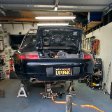
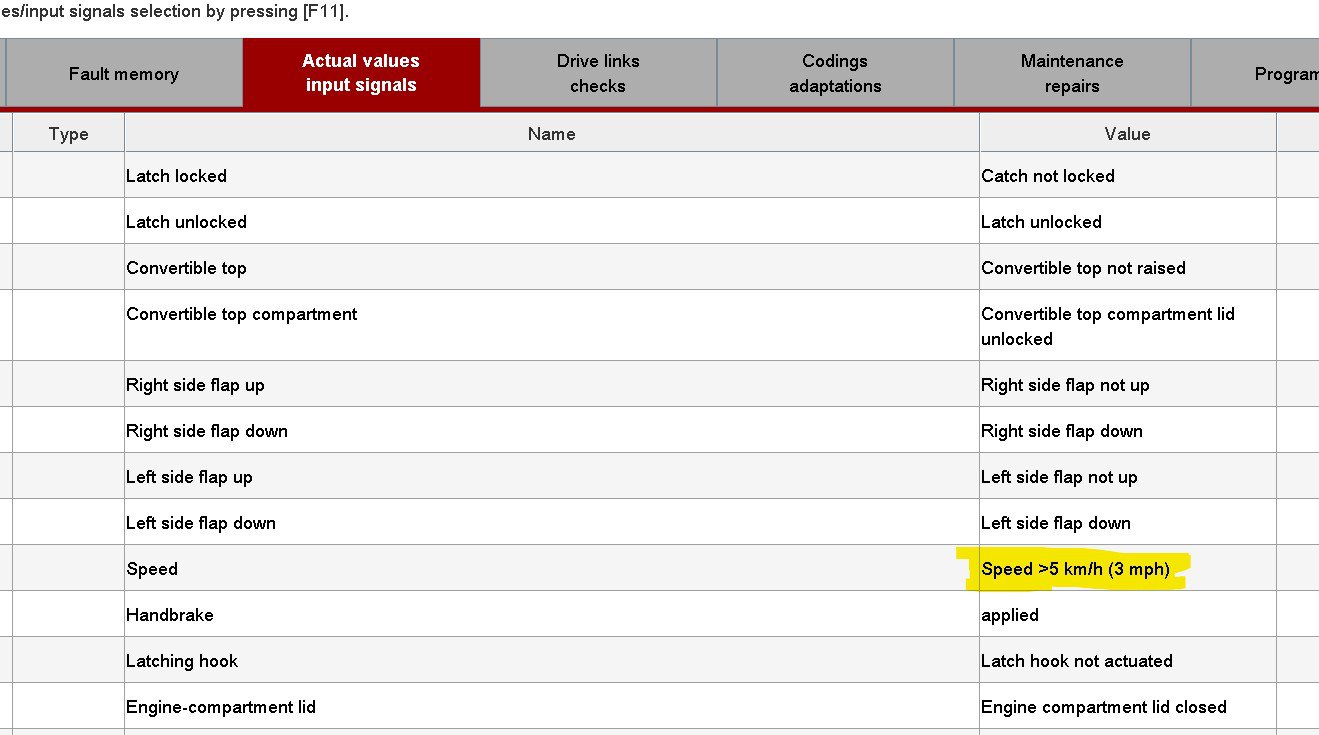
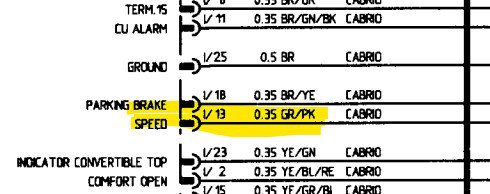
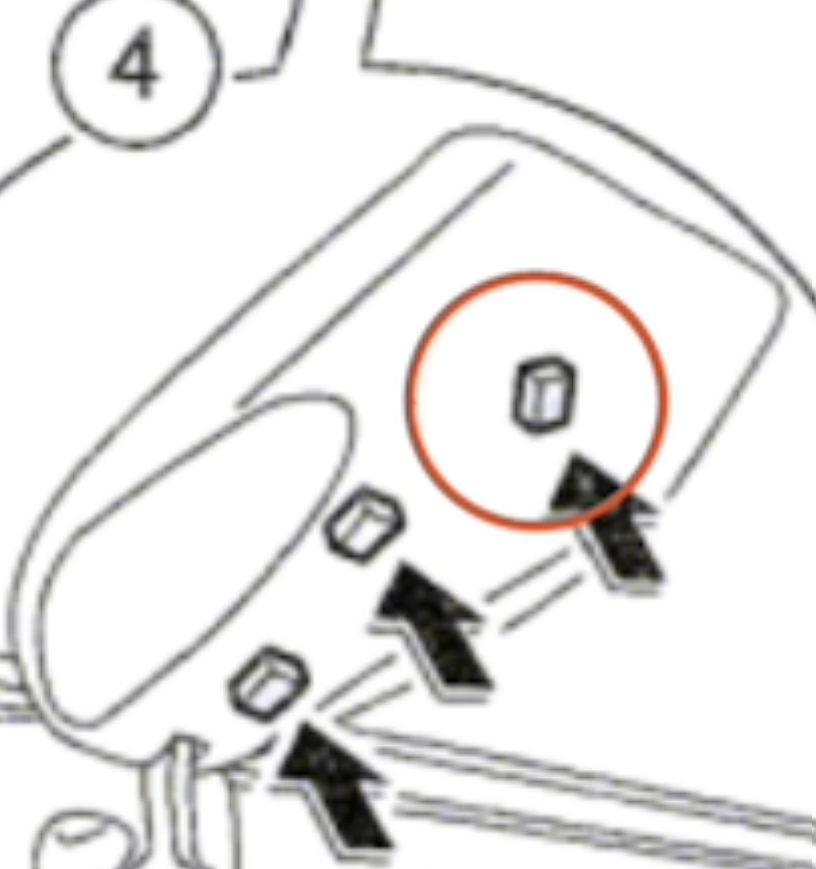
My Porsche is a 1999 996 C2 Cabriolet. The convertible top compartment lid (the “lid”) is attached to the body via two hinges which each have two arms. The front arm on the left hinge was broken, so I replaced the entire hinge, as replacement arms are not available. Here is the step by step process of how I did it :(I had a bunch of great photos with this article, but for some reason they did not copy and paste with the article) (I'm what you might call "format impaired".) : Tools needed: Flat Head Screw Driver 10mm Box Wrench T-30 Torx Bit 13mm Socket Short Socket Extension Electrical Tape Parts Needed: Replacement Hinge Part #996-561-907-02 (Left side) Replacement Seal Part#996-561-904-00 (“Cabrio Plate” in Porsche terminology) 1. Open the top partially so that the top is open about half way and the lid is in the fully open position. 2. Disconnect the cables that keep the rear-most part of the top secure to the car. There is one cable per side. Push the cable inward (toward the center line of the car) to release it from the ball connection. Release both cables. 3. Let the top move forward toward the closed position and push the window section up and out of the way. 4. Use the flat-head screw driver to remove the 4 plugs that keep the rear carpet in place. Remove the carpet, starting at the top and working it around the trim. 5. Once the carpet is out, follow the lid stop light wire down and disconnect it. It simply unplugs. 6. Release the wire from fastening elements (Porsche terminology) on the rear arm of the left hinge. 7. Mark the location of both left and right hinges in relation to the lid, then use the 10mm wrench to remove the 2 nuts securing each hinge to the lid. Prior to removing any parts, cover the drain hole below the hinge with a paper towel to prevent any small bits from falling into it. Once broken loose, they can be turned by finger. (This is probably better done with the assistance of a helper to support the lid, but can be accomplished by one person working alone by removing the rear nuts first and supporting the lid in place with one hand while removing the front nut on each side with the other hand.) Remove the lid from the car by lifting it up off the hinge. 8. (For the left hinge, only.) Remove the plastic fasteners for the lid stop light wire from the hinge for reuse on the replacement hinge. These both just clip on and can be easily remove with needle nosed pliers. 9. Remove the additional flap for reuse with the replacement hinge. The flap is removed by pushing the locking lever forward, then pulling the flap backwards and pulling downwards out from the underside of the hinge top. 10. Undo the motor drive from the hinge rear arm by removing the 2 Torx screws with the T-30 Torx bit. 11. Disconnect the motor drive push rod from the front locking hook at the front of the hinge by releasing the small clip retaining it. It should come off by releasing the locking tab slightly and pushing down at the same time. 12. Remove the motor drive body from the body of the hinge by removing the 2 Torx screws with the T-30 Torx bit. It’s not necessary to remove the pin with the flat head slot on it in order to remove the motor drive from the hinge. It may take a little rocking, but the part should come right off without much effort. 13. To give more play in the hydraulic line to the motor drive to be able to get it well out of the way, with the flat head screwdriver release the tie securing the line to the bottom of the compartment. This just pops off and presses back onto a threaded retainer. 14. Move the motor drive out of the way and with the 13mm socket remove the 2 nuts and 1 bolt attaching the body of the hinge to the body of the car. The 2 nuts are clearly visible, but the bolt is concealed behind a plug in the trim piece covering the front of the hinge. To access the bolt, remove the plug with the flathead screwdriver. (Be careful not to drop the socket or the bolt behind the trim piece as fishing them back out may be a challenge.) Once the nuts and bolt are removed, the hinge can be gently removed from behind the trim piece by pulling up on the back of the hinge and rotating the entire hinge about 90 degrees counter clockwise and pulling up and back while gently prying up on the trim pice with the other hand. (This is probably the hardest part of the entire procedure.) 15. Adhere the seal to the back of the new hinge replicating the position of the old seal on the old hinge. Clean up around the openings in the body panel to remove debris left behind from the old seal. Remove the backing film from the seal before installing the hinge. Make sure the contact surfaces of the hinge and body are not adhered over by the seal. Installing the new hinge is the reverse of the removal procedure: Work the front of the hinge back behind the trim piece; Attach the hinge to the car body with the 2 13mm nuts and the 13mm bolt and torque to 7.5 ftlb.(I used the electrical tape to temporarily secure the bolt to the socket and the socket to the extension to ensure I didn’t drop either down behind the trim piece.); Attach the motor drive to the hinge body with the 2 long T-30 Torx screws and torque to 7.5 ftlb.; Attach the motor drive to the rear hinge arm with the 2 short T-30 Torx screws and torque to 7.5 ftlb.; Reconnect the motor drive pushrod to the lock hook at the front of the hinge with the small clip; Re-secure the hydraulic line tie in the bottom of the compartment; Attach the brake light wire fasteners to the rear arm of the new hinge; Reattach the additional flap by inserting it onto the pins on the underside of the hinge and pulling it forward then pulling the locking lever backward until it locks; Install the lid, leaving the 10 mm nuts slightly loose and press the stop light wire into the plastic fasteners and plug it back into the connection; Reinstall the carpet; Reattach the rear roof cables; Next align the lid, so it will close properly aligned with the body. Using the marks made at the beginning of the process should make this a bit easier.1 point
-
Posted this on the 986 forum, thought I'd share it here... here's the link to the 986forum.com post in case there might be any relevant discussions 986 forum DIY1 point